Brain on fire and the science that put it out!
This past Saturday, I went to a DNA Learning Center class that explored the science behind the book Brain on Fire. The class focused on something called NMDA receptors, which are important proteins in the brain that help neurons communicate with each other. I didn’t know much about them before the class, but by the end I had learned a lot—and it was a really fun way to understand how the immune system and the brain can interact.
Learning About Antibodies
The big topic we talked about was antibodies. Antibodies are proteins made by the immune system that normally help protect us by recognizing and attacking harmful things like viruses and bacteria. But sometimes the immune system can get confused and accidentally target the body’s own cells. In the case of NMDA receptor encephalitis—the condition described in Brain on Fire—antibodies attack NMDA receptors in the brain, which can cause serious neurological symptoms.
Understanding how antibodies work helped explain how the disease develops and why it affects the brain in such dramatic ways.
Antibody Craft Time
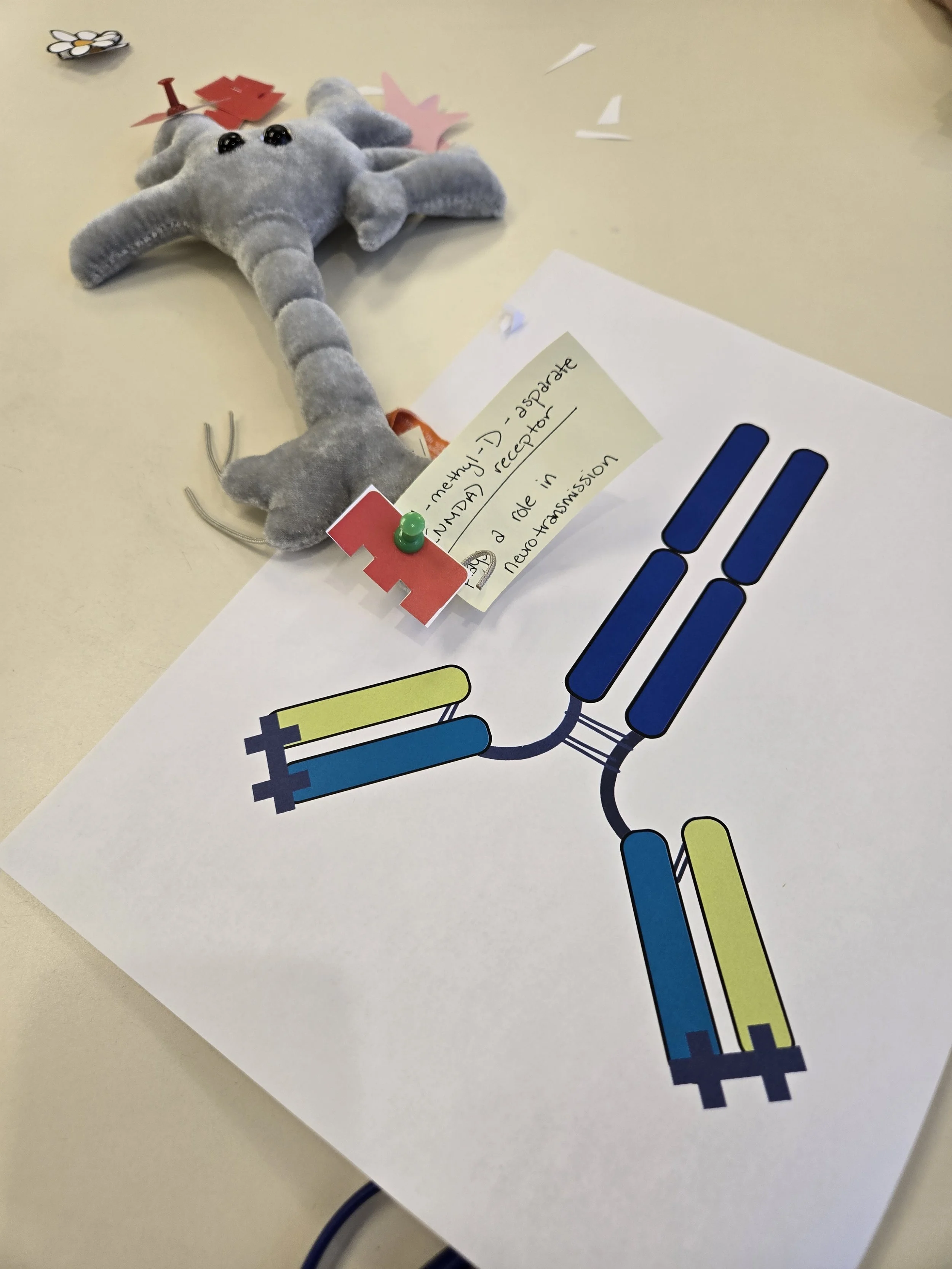
To help us visualize how antibodies recognize and bind to things in the body, we made a cute antibody craft.
It might sound simple, but building a model actually made it easier to understand how antibodies attach to specific targets. Science crafts are always a fun way to turn complicated ideas into something you can see and hold.
Talking About the Book
We also spent time discussing the story in Brain on Fire. The book describes a real medical mystery where a young woman experiences sudden neurological symptoms before doctors discover that antibodies attacking NMDA receptors were the cause. Talking about the book helped connect the science to a real-life situation and showed how important research and diagnosis can be.
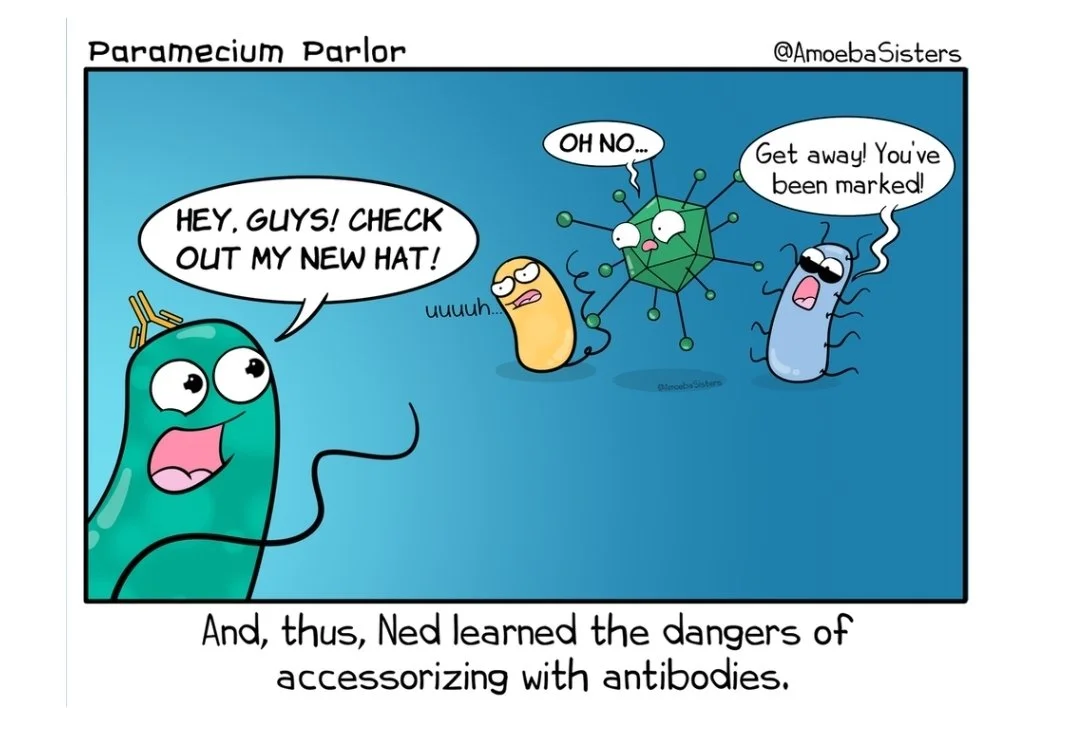
Antibody
This is my new favorite cartoon!
A Talk from Dr. Hiro Furukawa
One of the biggest highlights of the class was hearing a presentation from Dr. Hiro Furukawa, a scientist at Cold Spring Harbor Laboratories who studies cancer and the connection to NMDA receptors and how they function in the brain. He explained that these receptors sit on the surface of neurons and act like tiny molecular “gates.” When certain signals arrive, the gate opens and allows charged particles to enter the cell, which helps neurons communicate with each other. This communication is essential for processes like learning, memory, and brain development. It was fascinating to see how something so tiny at the molecular level can have such a huge effect on how our brains work.
Dr. Furukawa also talked about how scientists study these receptors in the lab and how understanding their structure helps researchers figure out what happens when things go wrong. For example, in diseases like NMDA receptor encephalitis—the condition described in Brain on Fire—antibodies attach to these receptors and interfere with their normal function. Hearing about this research from someone who actually studies these proteins every day makes science feel much more real and exciting. It reminded me that behind every scientific discovery there are real scientists asking questions and trying to understand how the brain works. The highlight was hearing new discoveries from Dr. Farukawa that will be published soon in Nature!
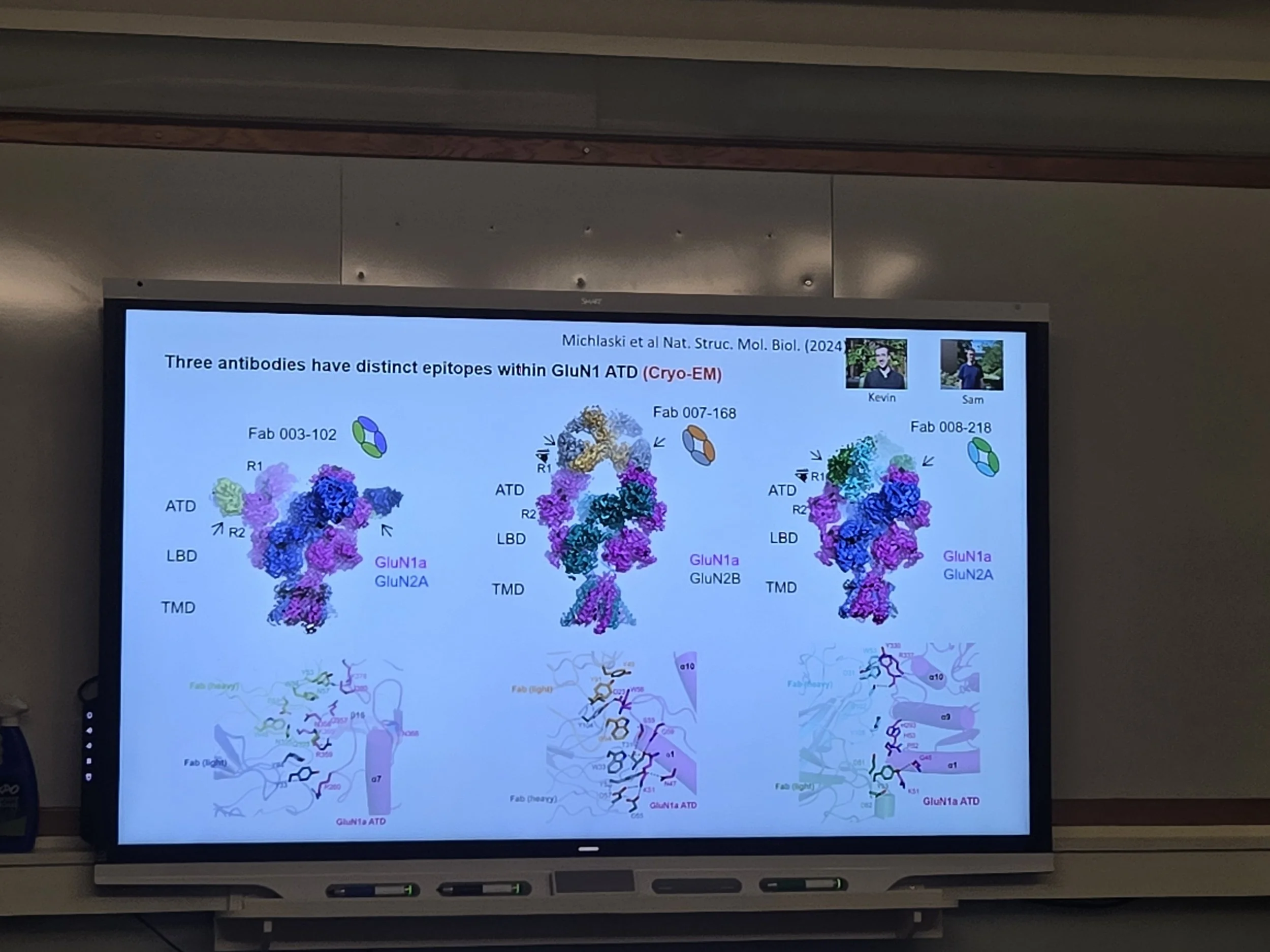
Receptor
This slide, from Dr. Farukawa, is an example of a receptor.
What I Took Away
By the end of the class, I had learned a lot about how the brain works, how antibodies normally protect us, and how autoimmune diseases can affect the nervous system. It was a great mix of science, discussion, and hands-on activities.
Overall, it was a really fun class, and it gave me a much better understanding of the science behind Brain on Fire.
Shout out
A big thank you to Cold Spring Harbor DNA Learning Center for hosting such an amazing class. And a special thank you to Dr. Hiro Furukawa for the incredible presentation—it was so interesting to hear directly from a scientist studying antibodies and the brain. I learned a lot and had a great time! In case you want to try real experiments, check out Saturday DNA! Sessions, where you can explore DNA, solve science mysteries, and work in a real lab just like a scientist.🧬🔬
This blog is based on my experience in CSHL Saturday DNA! Session: Brain on Fire on October 19, 2026.