Forensic Investigators: My Week of Solving a Mystery!
This week, I got to become a forensic investigator at a week-long camp at the Cold Spring Harbor DNA Learning Center! We spent the entire week working on a crime, and every day we learned a new type of forensic science that helped us find clues and figure out what happened.
The Case Begins
From the very beginning of camp, we had a crime to solve. Instead of just learning about forensic science from a textbook, we actually used different types of evidence to investigate our case.
Every piece of evidence gave us another clue. The challenge was figuring out which clues were important, connecting them together, and using science to narrow down what really happened.
Anthropometry: Measuring the Evidence
One of the things we learned about was anthropometry, which is the scientific study of measurements of the human body.
You could use measurements from evidence left at the crime scene to help figure out information about the person we were looking for. Things like height standing, foot length, and other body measurements can help investigators narrow down a list of suspects.
It was cool to see how something as simple as measuring could actually become an important piece of a criminal investigation.
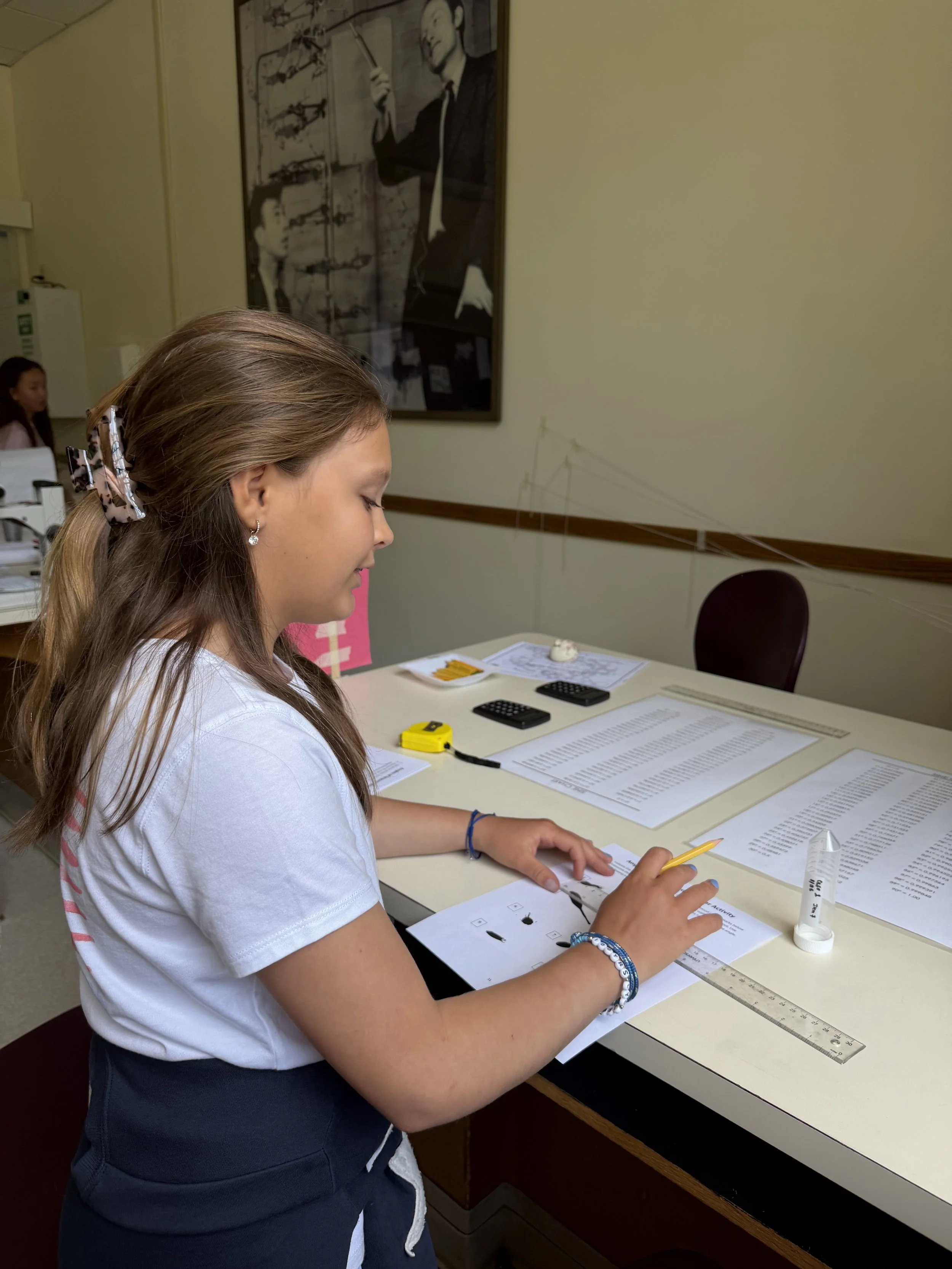
Anthropometry
Here I am measuring blood droplets using Anthropometry to measure and see the trajectory
Dusting and Lifting Fingerprints
Next, we learned about fingerprints. We practiced dusting evidence to find fingerprints and then lifting them so they could be examined.
Fingerprints are especially useful in forensic science because everyone's fingerprint patterns are different. Even though fingerprints are tiny, they can leave behind a huge clue.
Getting to actually dust and lift fingerprints was my favorite part because it was really cool seeing my own finger prints on the table. Instead of just looking at pictures of fingerprints, I was actually searching for them myself.
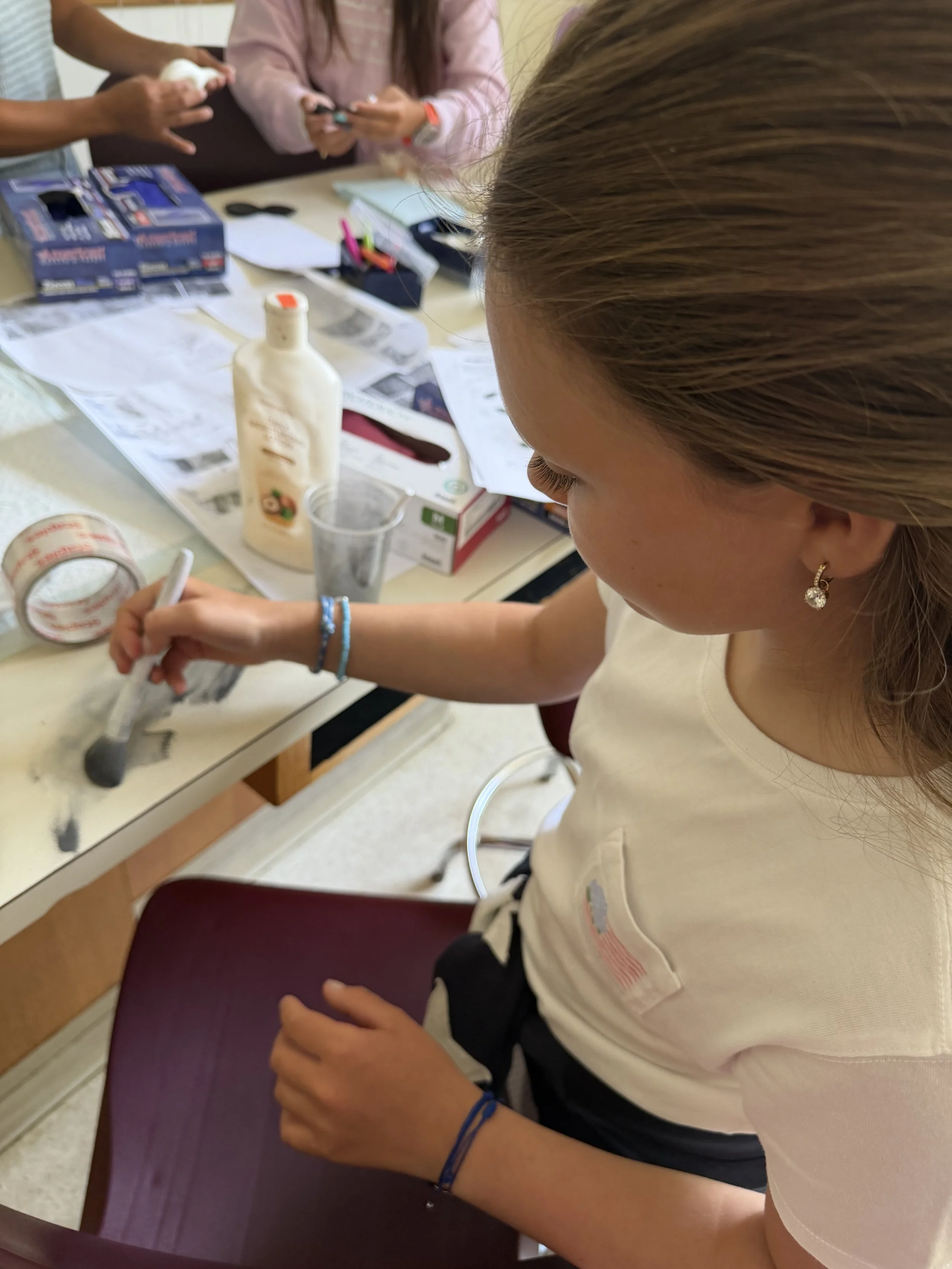
Dusting Fingerprints
This is me dusting my fingerprints from the table.
Following the Fibers
Another type of evidence we investigated was fibers. We looked closely at tiny pieces of material and learned how fibers can connect a person or object to a crime scene.
Fibers might come from clothing, hair, furniture, or other materials. They can be incredibly small, but that doesn't mean they're unimportant. In our investigation, we had to pay attention to these little clues and think about where they could have come from.
It was amazing to realize that something almost invisible could help tell part of the story of a crime.
Putting the Evidence Together
Every new technique we learned gave us another piece of the puzzle. We had to look at the evidence, compare it, ask questions, and decide what it meant.
Sometimes the answer seemed obvious, and other times we had to stop and rethink our theories. That's what made the investigation so much fun—we were constantly trying to figure out what clue would come next.
Thinking Like a Forensic Scientist
This camp taught me that solving a crime isn't just about finding one piece of evidence and say, "This person did it!"
Forensic investigators have to look at lots of different evidence and figure out how it all fits together. Fingerprints, fibers, measurements, and other clues can each tell a small part of the story. When you put them together, they can create a much bigger picture.
I also learned that being a good investigator means paying attention to details and not jumping to conclusions. Sometimes the smallest clue can completely change your theory!
Final Thoughts
My week as a forensic investigator was so much fun. I loved getting to do hands-on activities while working on a mystery throughout the entire week. It was especially exciting to see how different areas of science could work together to solve one crime.
A huge thank you to Mrs. Brittany Johnson for making this camp so much fun and teaching us so many amazing things about forensic science. I learned a ton, had an incredible time, and definitely left camp wanting to investigate even more mysteries!
Until next time, keep looking closely—because you never know when a tiny clue might solve the whole mystery!