Enzymes in action! - A science adventure with my Mom
This weekend, I had an enzyme-zing experience at the Cold Spring Harbor DNA Learning Center — and yes, it was just as awesome as it sounds! My mom and I signed up for the Enzymes in Action class, and we spent the day transforming everyday foods into mini science experiments. From cheese-making to apple juice creation, we got to see just how powerful these microscopic machines really are.
What Even Are Enzymes?
Before this workshop, I knew the word “enzyme,” but I didn’t really get what it meant. Now I do! Enzymes are special proteins that speed up chemical reactions inside living things — kind of like biological power tools. They’re the reason your body can digest food, repair cells, and basically keep you alive.
But enzymes aren’t just busy inside our bodies — they’re everywhere! Food scientists use them to make cheese, fruit juice, and lactose-free milk. So the same tiny molecules that help you digest lunch also help make the food you eat. Mind = blown. 🧠✨
Experiment #1: Turning Milk into Cheese
Our first experiment felt like magic. We started with plain milk, added an enzyme called rennin, and within minutes, the milk began to separate into curds and whey (yes, like the nursery rhyme!). The enzyme snipped milk proteins apart, helping them clump together. After straining the mixture, we were left with real, soft cheese — no cows required.
It was wild to realize that this is the same process used in cheese factories, just on a much smaller scale. Science never tasted so good!
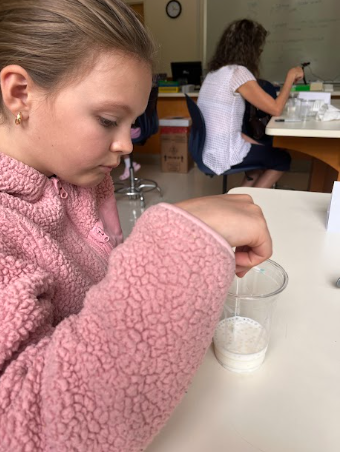
Lactose Free Milk
This is me turning regular milk into lactose free milk!
Experiment #2: Making Lactose-Free Milk
Next up: lactose-free milk! For this experiment, we added the enzyme lactase to regular milk. Lactase breaks down lactose, the natural sugar in milk that some people can’t digest. After the enzyme did its work, boom — lactose-free milk! 🥛
It was so cool to see the exact process that happens in the food industry, right there in front of us. Instead of just reading about it in a textbook, we were the scientists making it happen.
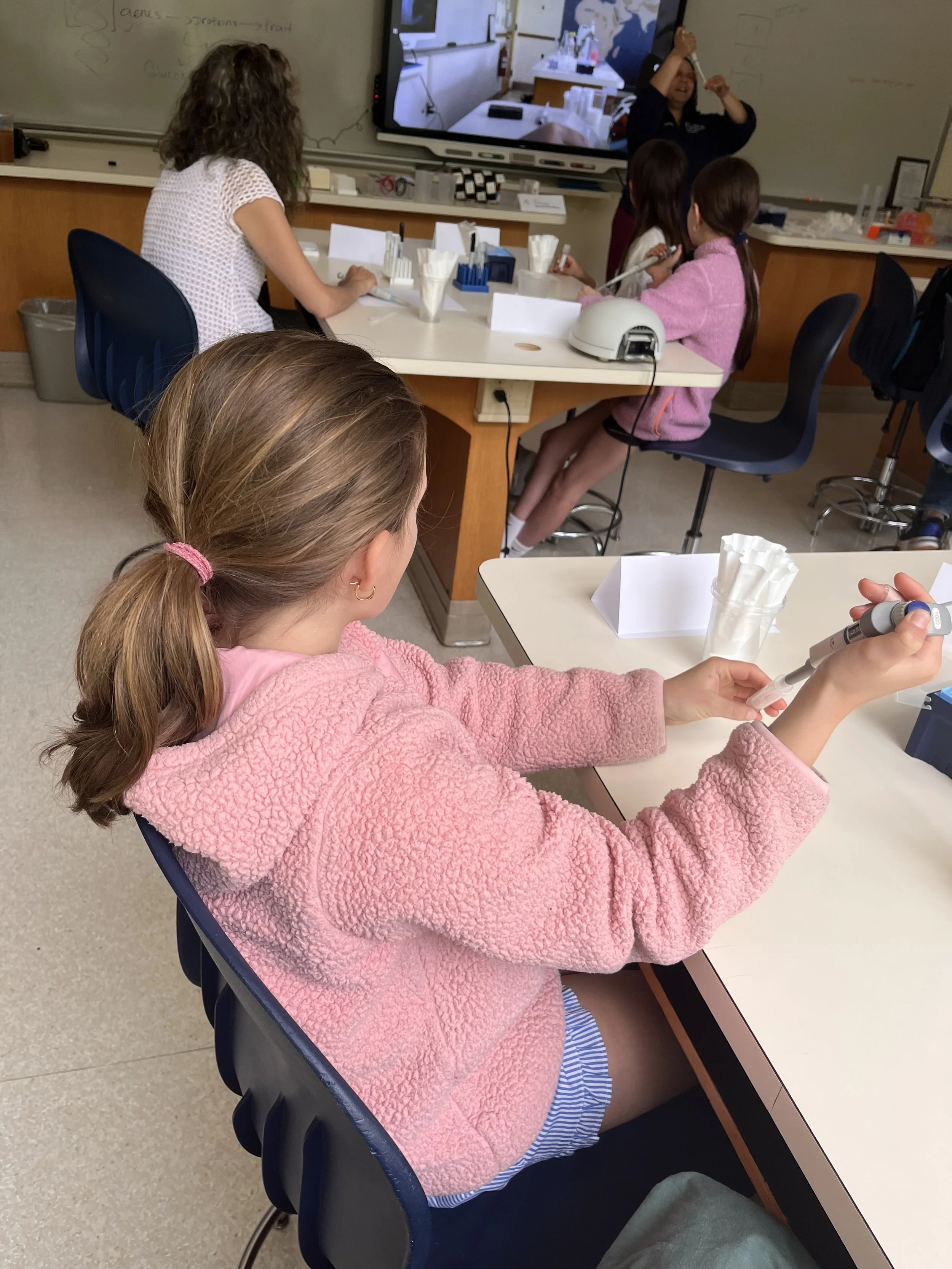
Working Magic!
Here I am pipetting lactase into regular milk to break down the lactose. This enzyme helps split the milk sugar into simpler parts, turning it into lactose-free milk — just like in the food industry!
Experiment #3: The Apple Juice Challenge
The third test was my favorite — and definitely the juiciest! We compared two methods for making apple juice from applesauce: a hands-on “mash it up” method and an enzyme-powered one.
We set up both versions at the same time. While I was busy smashing applesauce with my hands, the enzyme quietly got to work. The result? The enzyme version made way more juice — and a lot faster! It turns out that enzymes break down the pectin (a thickening molecule in fruit) and release more liquid. Basically, they outperformed my hands by a landslide.
What I Learned
By the end of the day, I had a whole new appreciation for how enzymes make life — and food — possible. From turning milk into cheese to squeezing more juice out of apples, they’re nature’s way of getting things done efficiently. The best part? I got to experience all of this side-by-side with my mom, who was just as fascinated as I was. Huge shout-out to Brittany Johnson, our instructor, for leading such an incredible class and making science come alive.
If you like science and want to try real experiments, check out 🧬🔬 Saturday DNA! Sessions🧬🔬at the Cold Spring Harbor Laboratory DNA Learning Center, where you can explore DNA, solve science mysteries, and work in a real lab just like a scientist.